|
||||||||||||||||||||||||||
 |
 |
|||||||||||||||||||||||||
|
|

|
||||||||||||||||||
|
|
|
|||||||||||||||||
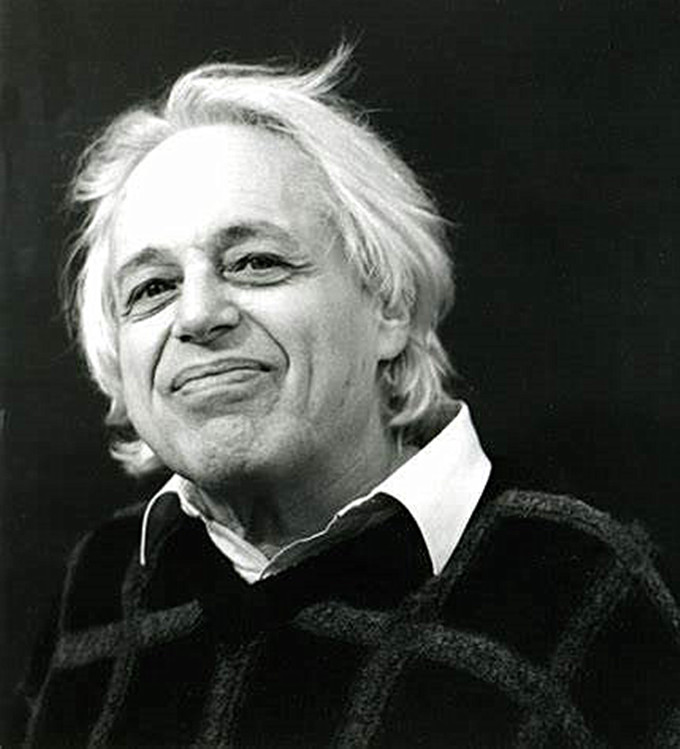
| 捷尔吉·利盖蒂(Gyorgy Ligeti 1923—2006) | ||||||||||||||||||
克里斯蒂安·泰兹拉夫演奏利盖蒂的《小提琴协奏曲》 |
||||||||||||||||||
Christian tetzlaf playing ligetti's violin concerto |
||||||||||||||||||
|
演奏乐器: 小提琴 交响乐团 简介补充: Gyorgy Ligeti 李盖蒂: Violin Concerto 小提琴协奏曲 ===================== Christian Tetzlaff, violinist François-Xavier Roth, conductor Cologne Philharmonic Orchestra 科隆爱乐乐团 |
||||||||||||||||||
|
|
||||||||||||||||||
|
音乐历史上的今天
1923年5月28日捷尔吉·利盖蒂(Gyorgy
Ligeti)在特伦西瓦尼亚出生。“在我三岁时,我和当老师的阿姨一起住了三个......当她意识到我害怕蜘蛛后,让我徒手去抓那些蜘蛛网。这让我又害怕又恶心。这是否能解释……我原创的那种难以渗透的音乐之网,我说不清楚。我的蜘蛛恐惧症大概有所贡献吧。” |
|
|||||||||||||||||
 |
||||||||||||||||||
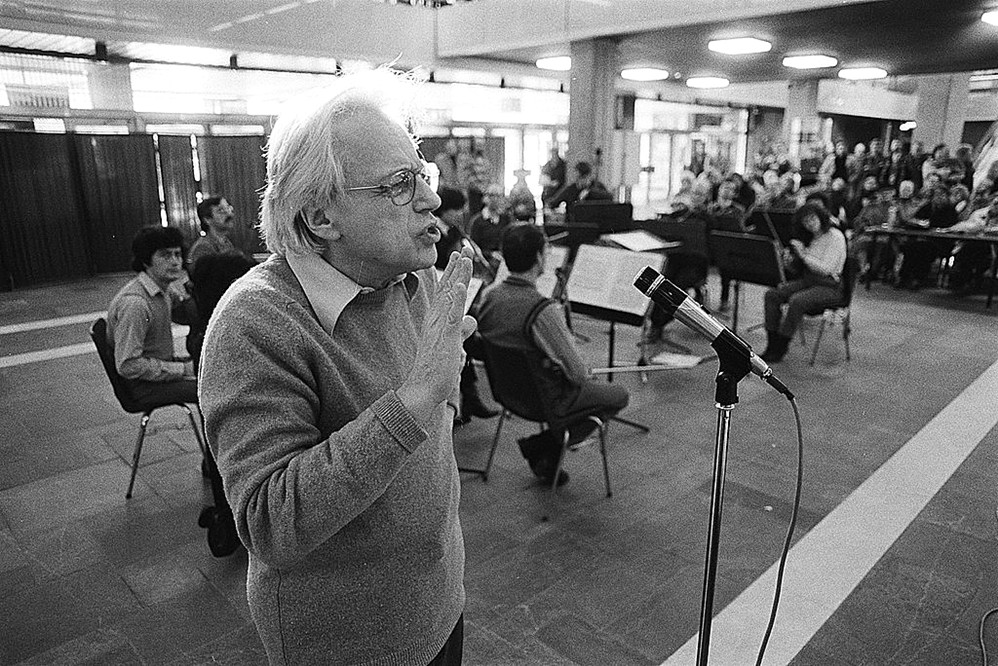
| 捷尔吉·利盖蒂(Gyorgy Ligeti ) 在排练中 | ||||||||||||||||||
| 利盖蒂的“蜘蛛恐惧症” | ||||||||||||||||||
|
利盖蒂的“蜘蛛恐惧症”不仅是他个人的心理情结,更深刻地影响了他“音块”和“微复调”这种标志性音乐技法的形成。他本人曾直言:“我的蜘蛛恐惧症大概对此(指其原创的音乐风格)有所贡献吧。” 这段故事的核心细节如下: · 心理创伤:利盖蒂3岁时和阿姨同住,阿姨为“治疗”他对蜘蛛的恐惧,强迫他徒手去抓蜘蛛网,这给他留下了伴随终生的恐惧和恶心感。 · 音乐转化:他将这种被蛛网缠绕的窒息感,转化成了密不透风的“音乐之网”。为此他发明了 “微复调” (将多个声部织成极度稠密的复调网)和 “音块” (将大量音符堆叠成巨大的音响团块)。 · 影史留名:导演库布里克在《2001太空漫游》中,用利盖蒂的这种音乐来表现浩瀚宇宙的压迫感和混沌感(如《大气》《安魂曲》),成就了影史最经典的配乐之一。 正如利盖蒂所说,这种音乐里每个单独的声部都听不真切,听众感受到的是一张巨大的、难以渗透的音响之网——这正像一张向他扑来的蜘蛛网。
利盖蒂的蜘蛛恐惧症源于他3岁时的一次心理创伤。当时与他同住的阿姨为了“治疗”他对蜘蛛的恐惧,强迫他去徒手抓蜘蛛网。 |
||||||||||||||||||
 |
||||||||||||||||||
| 利盖蒂的音乐手稿 | ||||||||||||||||||
| Ligeti's musical manuscripts | ||||||||||||||||||
| Ligetti's "spider phobia" | ||||||||||||||||||
| Ligeti's "spider phobia" is not only a personal psychological complex of his, but also profoundly influenced the formation of his characteristic musical techniques such as "musical blocks" and "micro-imitations". He himself once said: "My spider phobia probably contributed to this (referring to his original musical style)." The core details of this story are as follows: · Psychological trauma: When Ligeti was 3 years old, he lived with his aunt. The aunt forced him to catch spider webs with his bare hands to "treat" his fear of spiders, which left him with a lifelong fear and nausea. · Musical transformation: He transformed this suffocating feeling of being entangled by spider webs into an impenetrable "musical net". For this reason, he invented "micro-imitations" (weaving multiple voices into an extremely dense polyphonic net) and "musical blocks" (stacking a large number of notes into a huge sound mass). · Achieving fame in the film industry: Director Kubrick used Ligeti's music in "2001: A Space Odyssey" to express the oppressive and chaotic feeling of the vast universe (such as "Atmosphere" and "Requiem"), achieving one of the most classic soundtracks in film history. Just as Ligeti said, in this music, each individual voice is not clearly audible. What the audience feels is a huge, impenetrable sound net - just like a spider web that is closing in on him. Ligeti's spider phobia originated from a psychological trauma when he was 3 years old. At that time, his aunt, who lived with him, forced him to catch spider webs with his bare hands to "treat" his fear of spiders. For a child, this action caused a great psychological shock. This suffocating feeling of being entangled by spider webs eventually solidified into his lifelong fear and nausea, and in his later creations, it transformed into that dense, seemingly trapped "micro-imitation" musical texture. | ||||||||||||||||||
 |
||||||||||||||||||
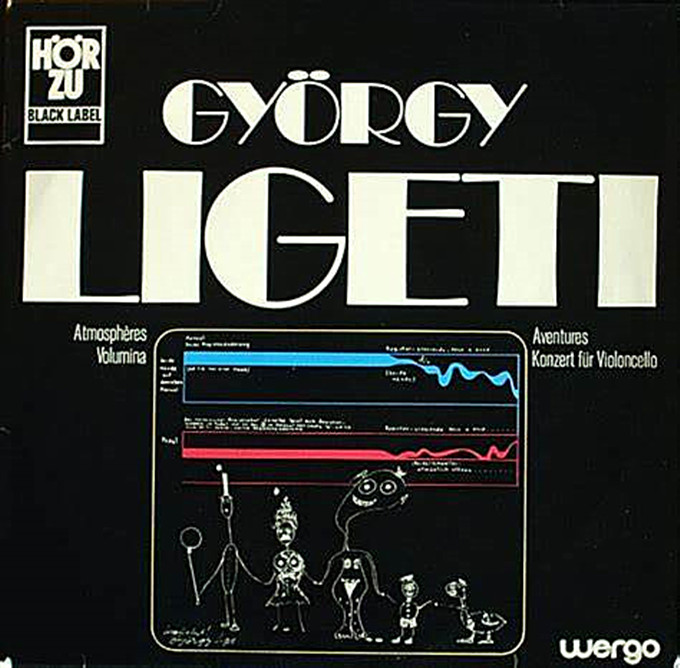
| 利盖蒂的管弦乐曲《气氛》(Atmosphères)CD封面 | ||||||||||||||||||
 |
||||||||||||||||||
|
诗歌中有“艨胧诗”,音乐中也有类似的“朦胧的音乐”,作曲家德彪西的许多作品即给人以“朦胧’’的“印象”,匈牙利作曲家
捷尔吉·利盖蒂的管弦乐曲《气氛》(Atmosphères)的管弦乐曲《气氛》(Atmosphères)大概可以看作是后起的这方面创作的有趣实例。 这首乐曲长度只有九分钟,却需要由一个一百人组成的管弦乐队(没有定音鼓)分成一百个声部来演奏。整个音量控制在乡乡夕一夕之内,由此造成了非常奇特的效果:听起来所有人都在演奏,但又似乎没有人演奏;既有音响,但又没有任何确切的音响;就好象看到一大片艨胧的云彩或烟雾在飘浮着,又好象是千万只飞蝇发出的嗡嗡声。 乐曲以一个非常轻柔的弱奏开始,奏出的一个音程很宽的和弦,因为没有节拍,其中音色的变换细微到几乎难以觉察,这个和弦就象是悬挂在空中的天体一样。后来出现了颤音、半音音阶等各种虽不响亮却使人有恐惧感的音响,乐曲结尾时又逐渐消逝于沉寂之中。 这首乐曲后来用于电影《2001年》中的外层空间景色配音,与影片所需要的情景气氛非常切合因而成为首名曲。 |
||||||||||||||||||
 |
||||||||||||||||||
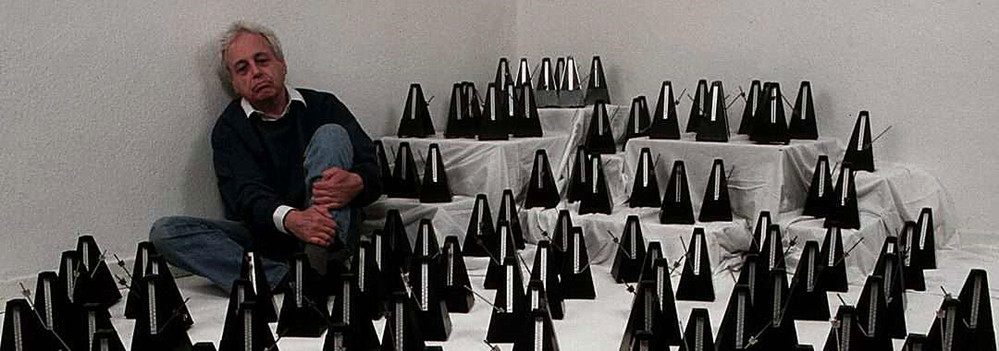
| 今天是乔治·利盖蒂诞辰一百周年纪念日。1923 年 5 月 28 日 - 2006 年 6 月 12 日 | ||||||||||||||||||
Today marks the centenary of György Ligeti.May 28, 1923-June 12, 2006 |
||||||||||||||||||
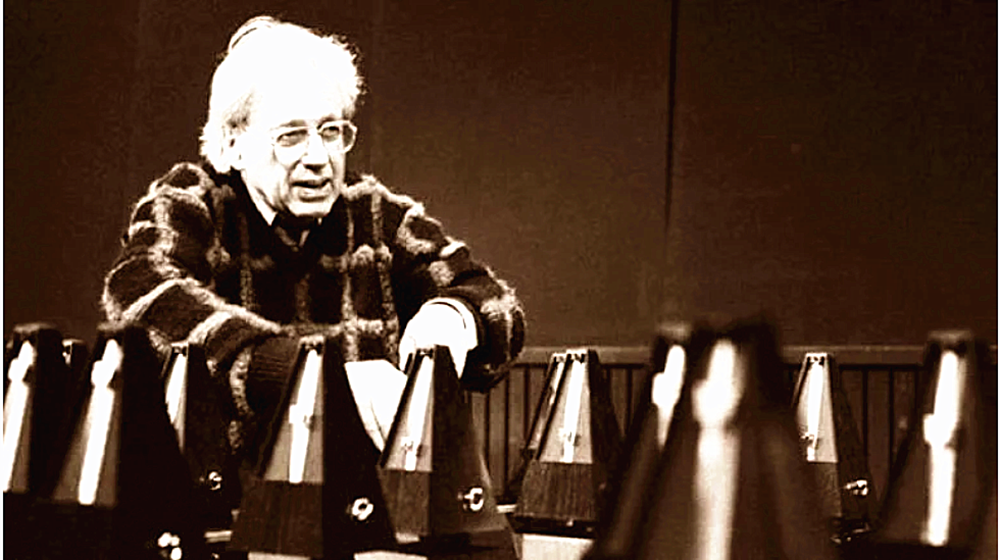
| 1962 年,他创作了《为 100 台闹钟而作的交响乐》这部作品。在这部作品中,闹钟以不同的频率发出声响,并在不同的时刻停止,从而形成了一个节奏的“云团”,随着闹钟依次停止,这个节奏“云团”也随之消散。 | ||||||||||||||||||
| In 1962, he composed “Poème Symphonique For 100 Metronomes,” in which metronomes tick at different rates and stop in different moments of the piece, creating a cloud of rhythms that dispels as the metronomes stop respectively. | ||||||||||||||||||
 |
||||||||||||||||||
 |
||||||||||||||||||
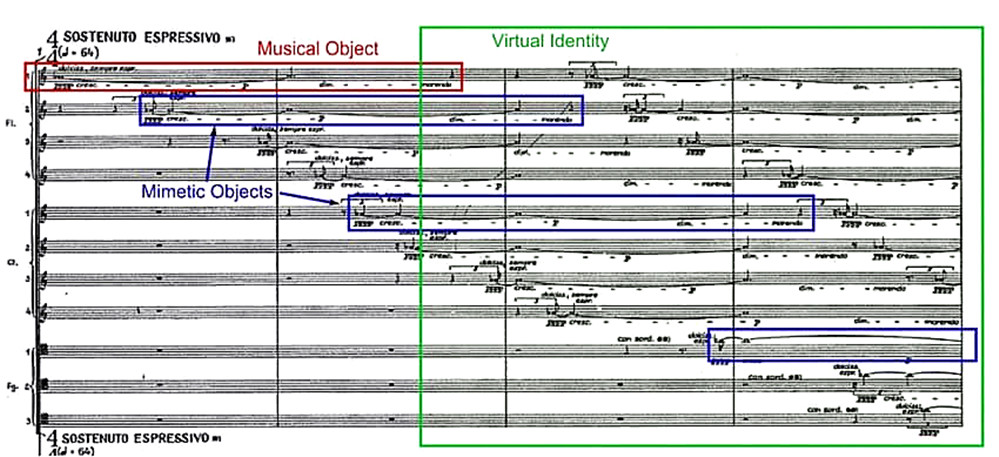
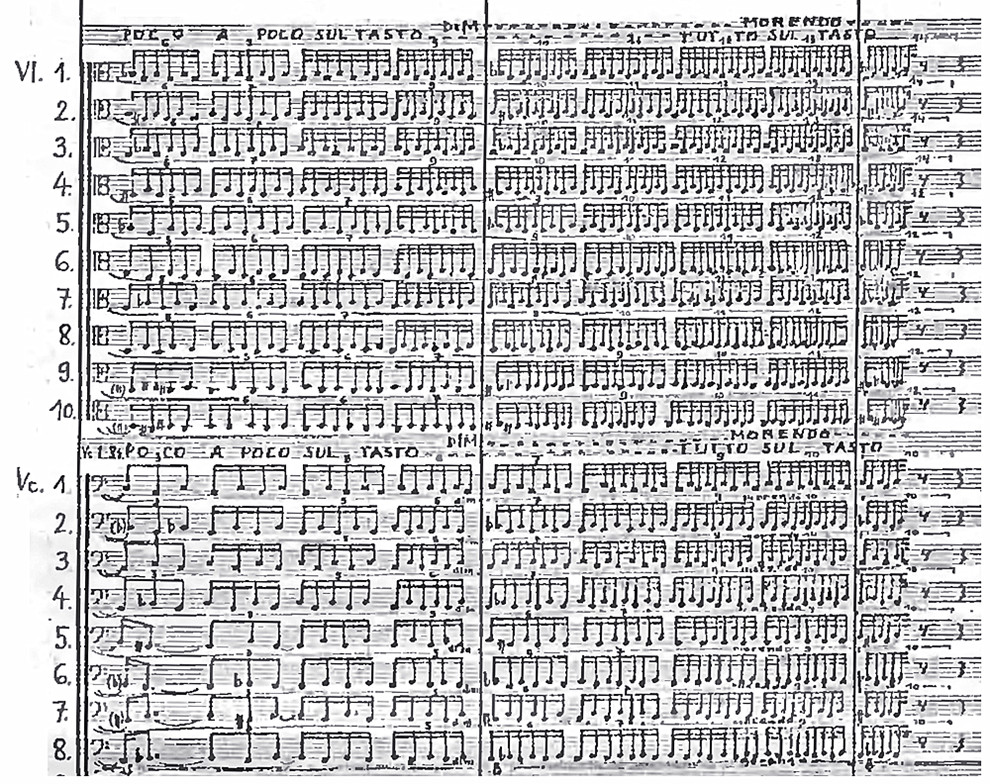
| 捷尔吉·利盖蒂(Gyorgy Ligeti )《气氛》(Atmosphères)总谱一页 | ||||||||||||||||||
|
With "poem"
Meng oboro in poetry, in the music has a similar "hazy music",
the composer Debussy's many works that give a person with
"twilight" "impression", the Hungarian composer zhe, Mr
Geithner's orchestral "mood" (Atmospheres) can be regarded as a
promising about interesting examples of this creation. The piece is only nine minutes long, but requires a 100-person orchestra (no timpani) to play it in 100 parts.The volume is controlled overnight, and this has a very strange effect: it sounds like everyone is playing, but no one seems to be playing;There is a sound, but there is no exact sound;It was like seeing large clouds or smoke floating, and it was like the buzzing of thousands of flies. The music begins with a very soft blare, a wide interval in which the change of tone is almost imperceptible because there is no beat, and the chord is like a celestial body suspended in the air.Then came the trill, the chromatic scale, all sorts of sounds that were not loud but frightening, and died away in silence at the end of the piece. This music was later used in the movie "2001" in the outer space scenery dubbing, with the film's need for the atmosphere of the scene very suitable and became the first song. |
||||||||||||||||||
 |
||||||||||||||||||
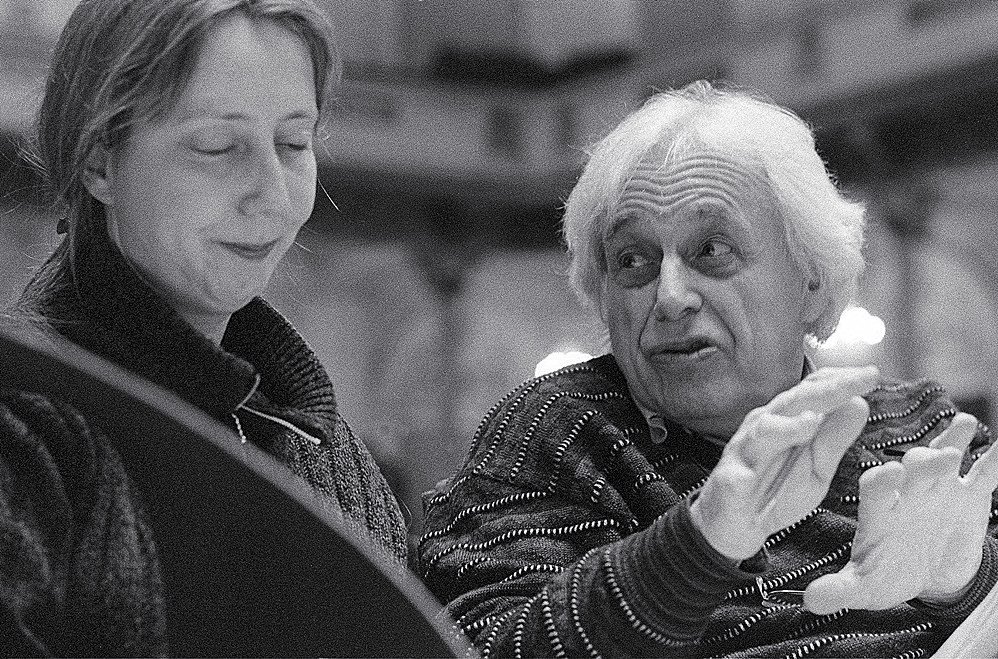
| 捷尔吉·利盖蒂和夫人 | ||||||||||||||||||
|
Today in
the history of music Gyorgy Ligeti was born in Transylvania on May 28, 1923."When I was three years old, I lived with my aunt, who was a teacher, for three...When she realized I was afraid of spiders, she told me to catch them with my bare hands.It made me sick and scared.Does that explain...My original, impenetrable musical web, I don't know.My arachnophobia probably contributed." Originally from Hungary, he left Hungary in 1956 to do experiments in electronic music in cologne, and became an Austrian citizen in 1967.Although ligeti was inspired by electronic music, it mainly composed works performed on traditional instruments. Gyorgy Ligeti (1923 -- 2006) is one of the most important musicians in Hungary.As a descendant of Hungarian jews, he received music education in Hungary, whose music was deeply rooted in his blood and had a profound influence on his later works. When gallitti was six, his family moved to Romania's second city, crozet, where he first saw opera and heard concerts, all of which gave rise to his later fascination with music.As a young man, ligeti studied composition, harmony and counterpoint at the crossberg conservatory of music with the Hungarian composer Ferenc Farkas.After world war ii, he re-enrolled at the Budapest conservatory of music, where he resumed his composition studies under s. Veress and forkosch.Ligetti graduated with honors in 1950 and remained on the faculty the following year until 1956.In 1956, for political reasons, ligeti fled to the west and made friends with a number of leaders of the avant-garde in Western Europe, such as stockhausen and h.emert.In 1971, ligetti was elected vice President of the international modern music association (ISCM) in Austria. He was awarded the German medal and the Bach prize of Hamburg in 1975, the Grawemever prize in 1986, and the international music conference award in 1996. Video of the day: 1. Christian tetzlaff playing ligetti's violin concerto; 2.2. Christophe eichenbach directs the Frankfurt radio symphony orchestra in ligetti's symphony, the atmosphere. |
||||||||||||||||||
|
|
||||||||||||||||||
 |
||||||||||||||||||
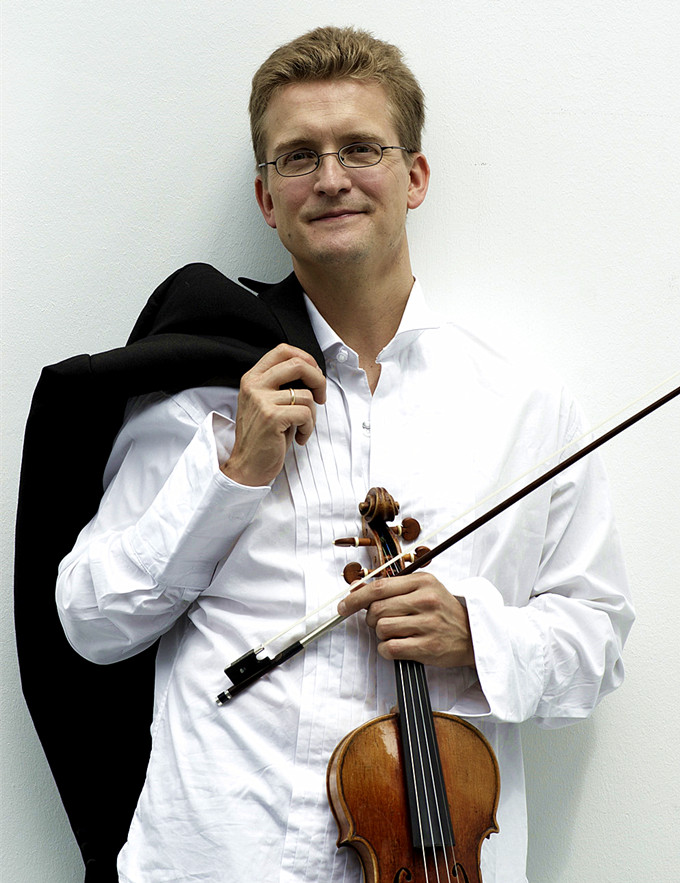
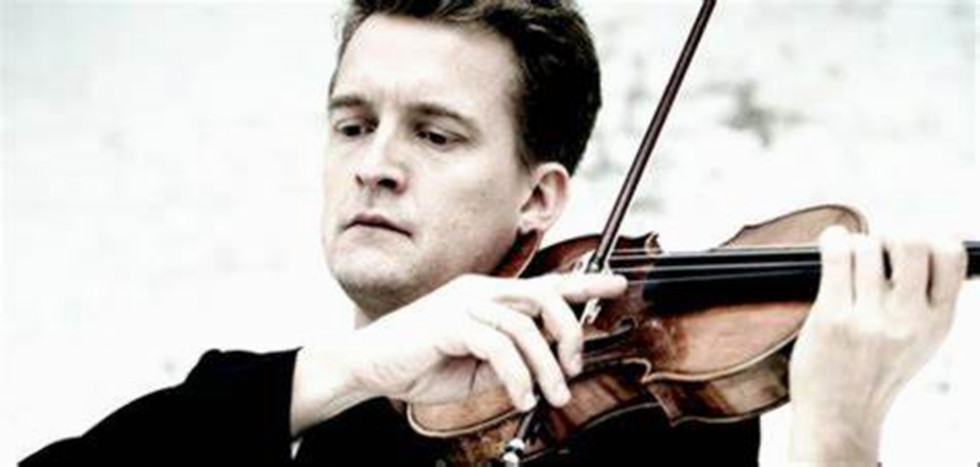
| 克里斯蒂安·泰兹拉夫(Christian Tetzlaff) | ||||||||||||||||||
| 多年来,克里斯蒂安·泰兹拉夫(Christian Tetzlaff)一直是古典音乐界最受欢迎的小提琴家和最令人兴奋的音乐家之一。 2015年5月,“卫报”在丹尼尔·哈丁(Daniel Harding)与伦敦交响乐团(London Symphony Orchestra)举行贝多芬小提琴协奏曲后写道:“我听过的最伟大的作品”。 与Christian Tetzlaff的音乐会经常成为口译员和观众的存在主义体验,熟悉的作品突然以全新的视角出现。 此外,他一次又一次地将注意力集中在被遗忘的杰作上,例如约瑟夫·约阿希姆(Joseph Joachim)的小提琴协奏曲,他成功地为这些杰作辩护,并试图在曲目中建立实质性的新作品,例如JörgWidmann的小提琴协奏曲,他于2013年首演-他拥有异常广泛的曲目,每年举办约100场音乐会。 是什么让这位1966年出生于汉堡并与家人一起住在柏林的音乐家如此独特-除了他出色的小提琴技巧-最重要的是三件事:他从字面上理解乐谱,他将音乐理解为一种语言,并将伟大的作品视为反映存在主义见解的叙事。 这听起来很自然,在音乐会的日常生活中是一种相当不寻常的方法。 当Christian Tetzlaff试图尽可能深入地完成乐谱文本时-无论“表演传统”如何,也不沉迷于通常的小提琴技术设施-众所周知的伟大作品经常以新的清晰度和清晰度出现。 作为一名小提琴家,Tetzlaff试图在作品背后消失-矛盾的是,这使得他的解释非常个性化。 其次,Christian Tetzlaff用他的小提琴“说话”,他的演奏,就像人类语言一样,包含了各种各样的表达方式,而不仅仅是为了良好的声音和艺术的光彩。 但最重要的是,他将杰作理解为关于中心经验的故事。 在他们的音乐中,作曲家处理了最强烈的情感,最大的幸福和最深刻的危机,因此Christian Tetzlaff作为音乐家进入了情感和音乐创作的前沿。 许多戏剧都是关于生与死的。 向观众传达这一点是Christian Tetzlaff的目标。 值得注意的是,Tetzlaff多年来一直在青年管弦乐队演奏,而在吕贝克音乐学院的Uwe-Martin Haiberg,他有一位老师,音乐解释是小提琴技术的关键-而不是相反。 早在1994年,Christian Tetzlaff就创立了自己的弦乐四重奏组,直到今天,室内乐仍然与他作为有和没有管弦乐队的独奏家的工作一样贴近他的心。 每年,他都会与Tetzlaff四重奏组一起进行至少一次广泛的巡演,包括2019/2020赛季的Alte Oper Frankfurt,汉堡的Elbphilharmonie,柏林的Philharmonie,布鲁塞尔的Palais des Beaux Arts和伦敦的Wigmore Hall。 Tetzlaff四重奏组于2015年获得了Diapason d‘or奖; 与他的妹妹Tanja Tetzlaff和钢琴家Lars Vogt的三重奏被提名为格莱美奖。 Christian Tetzlaff因其CD录音获得了无数奖项,最近一次是2018年德国唱片评论家年度奖,2018年7月的Diapason d‘或2017年的Midem古典音乐奖。 在Ondine,贝多芬和西贝柳斯的小提琴协奏曲将于2019年秋季与Robin Ticciati领导的柏林德国交响乐团合作录制。 巴赫的独奏奏鸣曲和Partiten一直是他特别关注的问题,他在2017年第三次发行了他们的录音。 斯特拉德杂志称赞这张专辑是“对巴赫独奏作品之美的细心而生动的回应”。 Christian Tetzlaff演奏德国小提琴制造商Peter Greiner的小提琴,并定期在克朗伯格学院任教。 |
 |
|||||||||||||||||
 |
||||||||||||||||||
| 克里斯蒂安·泰兹拉夫(Christian Tetzlaff) | ||||||||||||||||||
|
Christian Tetzlaff
ist seit Jahren einer der gefragtesten Geiger und spannendsten Musiker
der Klassikwelt. Im Mai 2015 schrieb The Guardian nach seinem
Beethoven-Violinkonzert mit dem London Symphony Orchestra unter Daniel
Harding: „The greatest performance of the work I’ve ever heard“. Konzerte mit Christian Tetzlaff werden oft zu einer existenziellen Erfahrung für Interpret und Publikum gleichermaßen, altvertraute Stücke erscheinen plötzlich in völlig neuem Licht. Daneben lenkt er den Blick immer wieder auf vergessene Meisterwerke wie das Violinkonzert von Joseph Joachim, für das er sich erfolgreich stark gemacht hat, und versucht, gehaltvolle neue Werke wie das von ihm im Jahre 2013 uraufgeführte Violinkonzert von Jörg Widmann im Repertoire zu etablieren – er pflegt ein ungewöhnlich breites Repertoire und gibt rund 100 Konzerte pro Jahr. Was den 1966 in Hamburg geborenen und inzwischen mit seiner Familie in Berlin lebenden Musiker so einzigartig macht, sind – neben seinem großen geigerischen Können – vor allem drei Dinge: Er nimmt den Notentext wörtlich, er versteht Musik als Sprache, und er liest die großen Werke als Erzählungen, die existenzielle Einsichten spiegeln. Was hier ganz selbstverständlich klingt, ist im Konzertalltag ein eher ungewöhnlicher Ansatz. Wenn Christian Tetzlaff den Notentext so tief wie möglich zu erfüllen versucht – ohne Rücksicht auf die „Aufführungstradition“ und ohne sich die oft üblichen geigentechnischen Erleichterungen zu gönnen –, dann zeigen sich die altbekannten großen Werke oft in neuer Klarheit und Schärfe. Als Geiger versucht Tetzlaff hinter dem Werk zu verschwinden – und das macht seine Interpretationen paradoxerweise sehr individuell. Zum Zweiten „spricht“ Christian Tetzlaff mit seiner Geige, sein Spiel umfasst, wie die menschliche Sprache, eine große Bandbreite an Ausdrucksmöglichkeiten und ist nicht allein auf Wohlklang und virtuosen Glanz ausgerichtet. |
||||||||||||||||||
 |
||||||||||||||||||
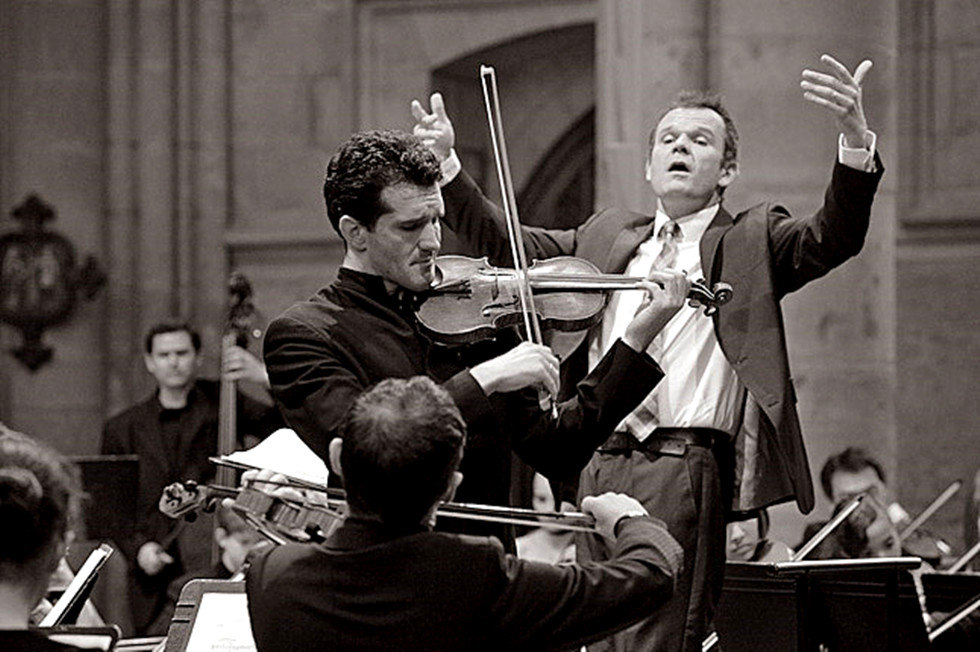
| 弗朗索瓦-泽维尔·罗斯(François-Xavier Roth,) | ||||||||||||||||||
|
罗斯毕业于音乐学院,他的老师包括长笛演奏家阿兰·马里昂和指挥大师雅诺斯·富斯特。 2000年,罗斯赢得了多纳泰拉电影指挥比赛,从而获得了为期两年的伦敦交响乐团助理指挥的任命。他还担任过约翰·艾略特·加德纳的助理指挥。2003年,他成立了Les Siecles乐团,该乐团演奏的乐器与乐曲的创作时期相适应,从巴洛克晚期和古典音乐到20世纪的拉威尔(Ravel)等音乐。与Les Siecles一起,他在法国、意大利、德国、英国和日本举办音乐会,并在伦敦的逍遥音乐节上露面。2013年,为了纪念《春之祭》一百周年,乐团在英国广播公司的逍遥音乐节(BBC Proms)和法兰克福歌剧院(Alte Oper)表演了这首关于时代乐器的作品。罗斯和Les Siecles为法国2频道设计了他们自己的电视连续剧《Presto!》这部电影连续三年上映,吸引了300多万观众。罗斯曾参与Les Siecles的社区音乐活动,包括赞助法国兴业银行(Societe generale)的管弦乐团和合唱团。罗斯与《世纪之歌》(Les Siecles)合作,首次复兴了百年来的《银色音色》(Le Timbre d’argent)。 2008年至2012年,罗斯担任英国广播公司威尔士国家交响乐团的副客座指挥。在2009-2010赛季,他是比利时列日爱乐乐团(OPL)的音乐总监。2011年9月,罗思成为西南乐团Sinfonieorchester Baden-Baden und Freiburg的首席指挥。2014年2月,乐团宣布将罗斯与SWR乐团的合同延长至2015-2016赛季。同月,2014年2月,科隆市宣布了这一任命。 |
||||||||||||||||||
 |
||||||||||||||||||
| 弗朗索瓦-泽维尔·罗斯(François-Xavier Roth,) | ||||||||||||||||||
|
Roth graduated
from the Conservatoire National Supérieur de Musique, where his teachers
included Alain Marion for flute and János Fürst for conducting. In 2000, Roth won the Donatella Flick Conducting Competition, which led to a 2-year appointment as Assistant Conductor of the London Symphony Orchestra. He has also served as an assistant conductor to John Eliot Gardiner. In 2003, he founded Les Siècles, an orchestra which performs on instruments appropriate to the period of composition of each piece, from late Baroque and Classical to 20th century music, such as Ravel. With Les Siècles, he has given concerts in France, Italy, Germany, England and Japan, appearing at the Proms in London. To mark the centenary of The Rite of Spring in 2013, the orchestra performed the work on period instruments at the BBC Proms and the Alte Oper, Frankfurt. Roth and Les Siècles have devised their own television series for France 2 entitled Presto!, which ran for three years and attracted audiences of over three million viewers. Roth has involved Les Siècles in community music initiatives, including sponsorship of orchestra and choir groups in the Société générale. With Les Siècles , Roth conducted the first revival of 100 years of Le Timbre d'argent. Roth was Associate Guest Conductor of the BBC National Orchestra of Wales from 2008 to 2012. He was Music Director of the Orchestre Philharmonique de Liège (OPL) for the 2009-2010 season. In September 2011, Roth became Principal Conductor of the SWR Sinfonieorchester Baden-Baden und Freiburg. In February 2014, the orchestra announced the extension of Roth's SWR orchestra contract through the 2015-2016 season. In the same month, February 2014, the city of Cologne announced the appointment … |
||||||||||||||||||
|
|
||||||||||||||||||
| 【利盖蒂】【Ligeti】Atmosphères 大气层 | ||||||||||||||||||
|
捷尔吉·利盖蒂: 大气 克里斯托夫•艾森巴赫指挥 法兰克福广播交响乐团 |
||||||||||||||||||
|
||||||||||||||||||
|
|
||||||||||||||||||
| 未得原作者编者授权严禁转载www.mt77.com任何内容 | ||||||||||||||||||





|
|
|
||||||
|
copyright © 2003-2005 xilu.com all rights reserved. |
||||||
|
|
||||||

