|
||||||||||||||||||||||||||
.png) |
 |
|||||||||||||||||||||||||
|
|

|
||||||||||||||||||
|
|
|
|||||||||||||||||
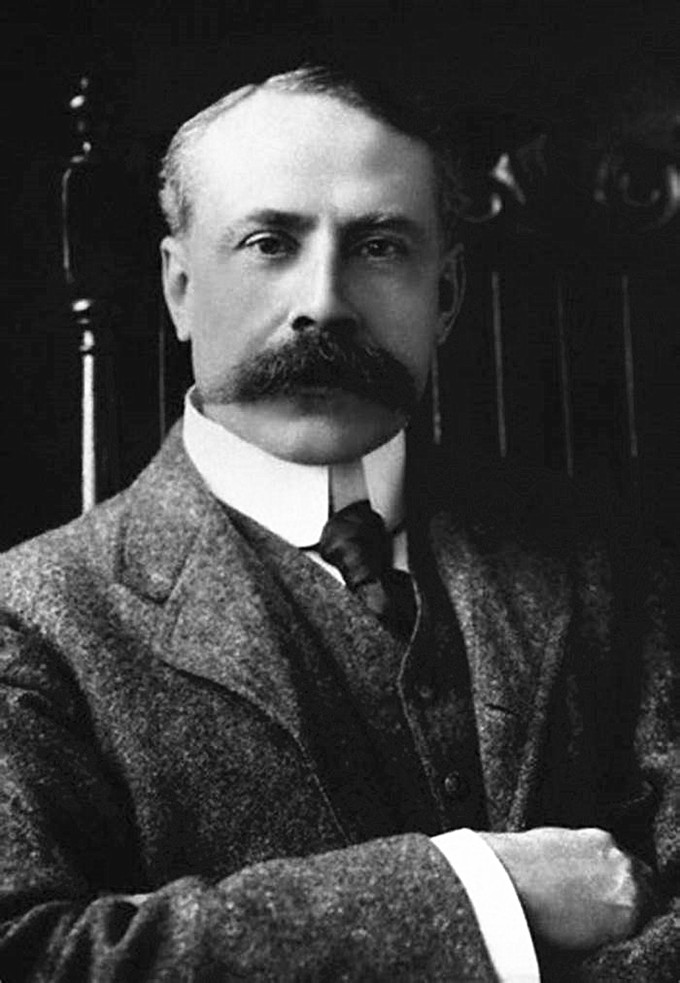
爱德华·埃尔加(Edward Elgar,1857—1934) |
||||||||||||||||||
| 爱德华·埃尔加:b小调小提琴协奏曲,Op.61 | ||||||||||||||||||
Edward Elgar - Violin Concerto in b minor, Op.61 |
||||||||||||||||||
|
爱德华·埃尔加:b小调小提琴协奏曲,Op.61 Edward Elgar - Violin Concerto in b minor, Op.61 Sadler's Wells Orchestra Gennady Rozhdestvensky Itzhak Perlman, violin (filmed 1981) 小提琴:伊扎克·帕尔曼 录制于1981年 |
||||||||||||||||||
|
|
||||||||||||||||||
|
音乐历史上的今天 1910年11月10日,埃尔加指挥弗里茨 ·克莱斯勒在伦敦的女王音乐厅表演了他的小提琴协奏曲,获得 “热烈的掌声,就像当年庆祝特拉法加海战胜利那般”。
爱德华·埃尔加(Edward
Elgar,1857年-1934年),英国作曲家、指挥家,1857年6月2日在伍斯特郡莫尔文希尔斯区布罗德希思出生。他父亲是一个乐器店店主兼圣乔治教堂管风琴乐手。埃尔加成长在浓厚的音乐环境中。但主要靠自学,15岁的时候他想去德国莱比锡留学学习音乐,但是由于经费不够,只好在他父亲的商店工作,并参加了社区的一个音乐俱乐部,在乐队里当小提琴乐手。1885年继承父职任教堂管风琴师。在他29岁的时候,他认识了大他8岁的前市长亨利·罗伯兹爵士的女儿爱丽丝,3年之后两人结婚。在妻子的鼓励和疏通下,埃尔加集中精力进行音乐创作,1890年,以序曲《弗鲁瓦萨尔》引起人们的注意。并搬到伦敦发展,进入音乐圈子。但是初期并不成功。不久因为健康原因又返回家乡。 |
|
|||||||||||||||||
 |
||||||||||||||||||
| 爱德华·埃尔加(Edward Elgar,1857—1934) | ||||||||||||||||||
| \\\爱德华·埃尔加:b小调小提琴协奏曲,Op.61\\\ | ||||||||||||||||||
|
埃尔加的这首小提琴协奏曲作于1910年,这是在《第一交响曲》与《第二交响曲》之间的作品,当时埃尔加53岁。在总谱上,西班牙语的标示是“在这里封藏着某人的精神”。据考据这个可能指华特利夫人,她和埃尔加的友情似乎纯粹是精神性的。此曲于1910年11月10日,由埃尔加指挥皇家爱乐乐团首演,小提琴独奏由克莱斯勒担纲。埃尔加先是作为一位小提琴家而进入乐坛,他1882年起在斯托克利指挥的伯明翰交响乐因中任第一小提琴。他的创作特点在于把高雅的陈述与流行风格相结合,外在表达亲切和蔼,内里又隐藏着内省的抑郁,两者的融合并不是十分和谐。他对旋律的捕捉非常敏感,属于善于把握乐队技巧的大师之一。埃尔加喜欢色彩变化,其作品中因充溢着太多的情感往往影响音乐本质的深度,但其中蕴含的丰富人道主义精神也冲破了英国音乐那种稳重、含蓄、有时有些沉闷的固定风格。 这部小提琴协奏曲由三个乐章组成: 1. 快板,b小调,协奏型奏鸣曲式。由乐队齐奏长大的第一主题开始,这个主题分成两段,调性变化产生动人的效果。随后出现的第二主题给以柔和的姿态,独奏小提琴也以表现第一主题而登场。发展部比较短,经过由复弦奏法所构成的活泼部分,一度减速而变成原来速度,独奏小提琴沉默。乐队奏第一主题的后半动机,当第一小提琴奏出前半动机后,独奏小提琴反复其部分动机而进入再现部。再现部是D大调,相当自由。 2. 行板,降B大调,自由的3段体,另含一种诗一样的热情,在平静的气氛中表现朴素的第一个主题,在此上的独奏小提琴奏同样朴素的对位主题。然后乐队奏出C大调、E大调两个新主题,乐曲转为降E大调而逐渐趋于高潮,经过对位主题,小提琴奏细致的快速音群,转入D大调中段。中段有一个雄壮、雄辩的主题,当转移至主调时,又再度进入沉思。最后乐队与小提琴应答,在梦幻中结束。 3. 很快的快板,b小调,戏剧化的乐章。以狂想性弦乐构成的导入句开始,独奏小提琴予以发展。进入B大调时,乐队奏出主要主题,独奏提琴发展后经经过句,表现优美的第二主题。主题的发展极为华丽和技巧化,在华彩乐段用上了埃尔加独创的"震音拨奏"。华彩进入结尾后为慢板,然后最初的狂想型乐句再现,最后是壮丽的凯旋型的乐句。——莫扎特之旅 |
|
|||||||||||||||||
 |
||||||||||||||||||
|
爱德华·埃尔加(Edward
Elgar,1857年6月2日—1934年2月23日),出生于伍斯特郡,英国作曲家。 埃尔加出生于乐器商家庭,初从父学小提琴,兼擅多种乐器,并自学作曲。1904年因所作国定颂歌《加冕颂》(1902年作)受封为爵士。1931年受封从男爵。 埃尔加的作品既有民族特色又饱蕴后期浪漫主义内在热情,以交响曲三部(第三部未完成)、管弦乐变奏曲《谜》、序曲《在伦敦城》、《小提琴协奏曲》、《大提琴协奏曲》、弦乐《小夜曲》、《引子与快板》、《威风凛凛进行曲》五首、清唱剧《吉伦修斯之梦》等较为著名。 |
||||||||||||||||||
 |
||||||||||||||||||
| 爱德华·埃尔加小提琴协奏曲唱片 | ||||||||||||||||||
| Edward Elgar (June 2, 1857 - February 23, 1934) was an English composer born in Worcester County. Elgar came from a family of instrument merchants. He initially learned the violin from his father and was proficient in various instruments. He also self-studied composition. In 1904, he was knighted for his composition "The Coronation Anthem" (composed in 1902). In 1931, he was made a baron. Elgar's works have both national characteristics and contain the inner passion of late romanticism. His notable compositions include three symphonies (the third one was unfinished), the orchestral variation "The Enigma", the overture "In London City", the violin concerto, the cello concerto, the string "Nocturne", "Introitus et Allegro", and the "Resplendent March". | ||||||||||||||||||
 |
||||||||||||||||||
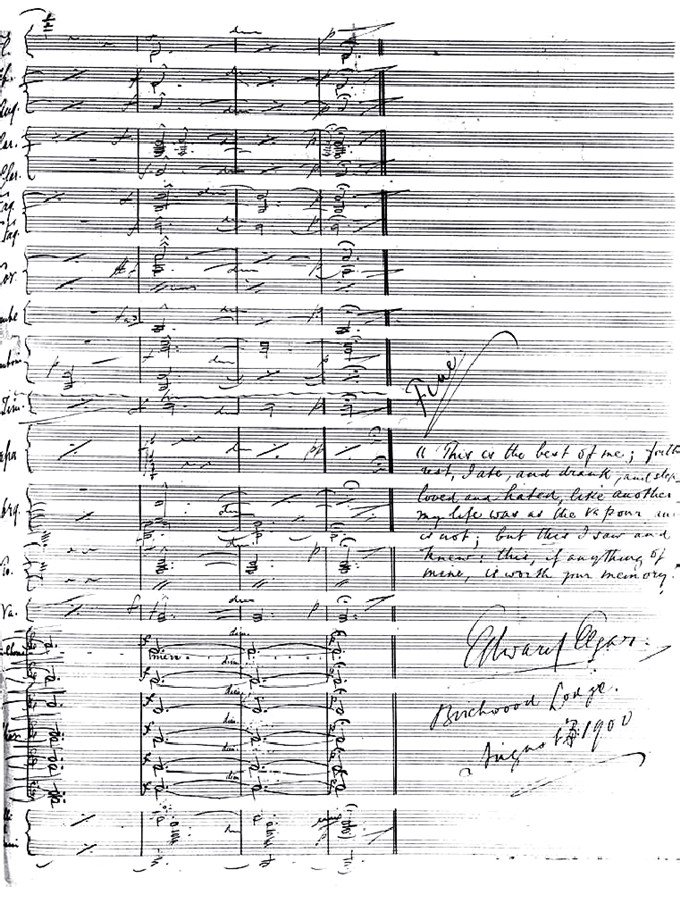
| 爱德华·埃尔加(Edward Elgar,1857—1934)手稿 | ||||||||||||||||||
 |
||||||||||||||||||
| 介绍爱德华·埃尔加(Edward Elgar,1857—1934)的书籍 | ||||||||||||||||||
| This violin concerto by Elgar was composed in 1910, which is a work between his "First Symphony" and "Second Symphony". At that time, Elgar was 53 years old. On the score, the Spanish text reads "Here lies the spirit of someone". It is believed that this might refer to Mrs. Wallett, whose friendship with Elgar seemed purely spiritual. This piece was premiered by Elgar conducting the Royal Philharmonic Orchestra on November 10, 1910, with the violin solo performed by Kreisler. Elgar first entered the music world as a violinist. From 1882, he served as the first violinist in the Birmingham Symphony Orchestra under Stokely's direction. His creative characteristic lies in combining elegant statements with popular styles. The external expression is kind and amiable, while the inner part hides introspective depression. The fusion of the two is not very harmonious. He is very sensitive to melody capture, and is one of the masters who are good at grasping the band's techniques. Elgar likes color changes, and his works are often influenced by too much emotion, which affects the depth of the music essence. However, the rich humanitarian spirit contained in it also breaks through the stable, reserved, and sometimes dull fixed style of British music. This violin concerto consists of three movements: 1. Allegro, in B minor, in a concerto sonata form. The first theme, which is played by the orchestra in unison, begins, and this theme is divided into two parts, with tonal changes creating a touching effect. The second theme that follows takes a gentle posture, and the solo violin also appears to perform the first theme. The development section is relatively short, and through an active part composed by plucked strings, it slows down and returns to the original speed, with the solo violin remaining silent. The orchestra plays the second theme's latter motive, and when the first violin plays the first motive, the solo violin repeats its part motive and enters the recapitulation section. The recapitulation section is in D major, quite free. 2. Andante, in B flat major, in a free three-part form, containing a poetic passion. In a calm atmosphere, the simple first theme is expressed, and the solo violin plays the same simple counterpoint theme. Then the orchestra plays two new themes in C major and E major, the music turns to E flat major and gradually reaches the climax, passing through the counterpoint themes, the violin plays delicate rapid groups, and enters the middle section in D major. The middle section has a majestic and eloquent theme, when transferred to the tonic key, it enters into contemplation again. Finally, the orchestra and the violin respond, ending in a dreamy manner. 3. Presto agitato, in B minor, a dramatic movement. It begins with an introverted string composition, and the solo violin develops it. When entering B major, the orchestra plays the main theme, and the solo violin develops after the refrain, expressing the beautiful second theme. The development of the theme is extremely magnificent and technicalized, and in the cadenza, Elgar's original "resonant plucking" is used. The cadenza ends in a slow movement, and then the initial introverted phrase is repeated, and finally a magnificent triumphal phrase. -- The Mozart Journey | ||||||||||||||||||
 |
||||||||||||||||||
| 克莱斯勒演奏爱德华·埃尔加(Edward Elgar)小提琴协奏曲唱片 | ||||||||||||||||||
| On December 23, 1917, at the age of 44, Rachmaninov left Russia for good, with no one to see him off, only Shariabin prepared some caviar and homemade white bread for him. | ||||||||||||||||||
 |
||||||||||||||||||
| 克莱斯勒演奏埃尔加小提琴协奏曲 | ||||||||||||||||||
| Chrysler performs Elgar's Violin Concerto | ||||||||||||||||||
| 弗里茨·克莱斯勒是一位奥地利出生的小提琴家和作曲家。他是当时最著名的小提琴大师之一,被认为是有史以来最伟大的小提琴家之一,他以甜美的音调和富有表现力的乐句而闻名。像他那一代的许多伟大的小提琴家一样,他发出了一种独特的声音,人们一眼就能认出这是他自己的声音。尽管他的风格在很多方面源自法国-比利时学派,但他的风格仍让人想起战前维也纳的格穆特里希(gemutlich)生活方式。 | ||||||||||||||||||
 |
||||||||||||||||||
| 埃尔加亲自指挥自己创作的小提琴协奏曲 | ||||||||||||||||||
| Elgar conducted personally his own composition of the violin concerto. | ||||||||||||||||||
| Fritz Kreisler Violinist Friedrich "Fritz" Kreisler was an Austrian-born violinist and composer. One of the most noted violin masters of his day, and regarded as one of the greatest violinists of all time, he was known for his sweet tone and expressive phrasing. Like many great violinists of his generation, he produced a characteristic sound which was immediately recognizable as his own. Although it derived in many respects from the Franco-Belgian school, his style is nonetheless reminiscent of the gemütlich lifestyle of pre-war Vienna. | ||||||||||||||||||
 |
||||||||||||||||||
| 克莱斯勒的小提琴 | ||||||||||||||||||
 |
||||||||||||||||||
| B小调小提琴协奏曲 作品 61 号——耶胡迪·梅纽因/阿德里安·博尔特爵士/新爱乐乐团 | ||||||||||||||||||
| Violin Concerto In B Minor Op 61 -- Yehudi Menuhin/Sir Adrian Boult/New Philharmonia Orchestr | ||||||||||||||||||
 |
||||||||||||||||||
| 埃尔加与伦敦交响乐团在女王音乐厅的演出(©《音乐时报》,公共领域) | ||||||||||||||||||
| Elgar and the London Symphony Orchestra at the Queen's Hall (© The Musical Times, PD-US) | ||||||||||||||||||
 |
||||||||||||||||||
| 一张爱德华·埃尔加出生地的照片,他于 1857 年 6 月 2 日出生于此,地点位于英格兰西米德兰兹郡伍斯特附近的下布罗德海斯。 | ||||||||||||||||||
| A photo of Edward Elgar's birthplace, where he was born on 2 June 1857, Lower Broadheath near Worcester in the English West Midlands | ||||||||||||||||||
|
|
||||||||||||||||||
| Today in Music History: November 10, 1910, Elgar conducted Fritz Kreisler in a performance of his violin concerto at the Queen's Concert Hall in London, receiving "warm applause, just like the celebration of the victory of the Battle of Trafalgar back then." Edward Elgar (1857-1934), an English composer and conductor, was born on June 2, 1857, in Broadhuse, Morwen Hills, Worcestershire. His father was a music store owner and a church organist at St. George's Church. Elgar grew up in a musical environment. However, he mainly relied on self-study. At the age of 15, he wanted to go to Leipzig, Germany to study music, but due to insufficient funds, he had to work in his father's store and joined a music club in the community, serving as a violinist in the band. In 1885, he inherited his father's position as the church organist. At the age of 29, he met Alice, the daughter of Sir Henry Roberts, the former mayor, and they got married three years later. With the encouragement and mediation of his wife, Elgar concentrated on music composition. In 1890, his work "Fruvasar" attracted attention. He moved to London to develop his career and entered the music circle. However, it was not successful initially. Soon, due to health reasons, he returned to his hometown. It was not until Elgar was nearly 40 years old that he gained some composer's reputation. He composed music for local music festivals and gradually gained recognition. In 1899, his first symphonic work "Riddle Variations" was published and premiered in London under the direction of German conductor Hans Richter, achieving success. In 1900, he created the oratorio "The Dream of Jeronimus" (based on the poems of Cardinal John Henry Newman). These two works are regarded as the symbol of the revival of British music. In 1901, he composed his first "Elegant Processional" (the last one was created in 1930), which was highly praised and the British King and Queen also attended his concerts. This established his reputation as the most successful composer in Britain at that time. After that, he wrote a series of works such as "In the City of London" (1901), oratorio "The Apostle of Christ" (1903), and "The Kingdom" (1906). Between 1902 and 1914, he visited the United States four times. In 1904, he was awarded the title of knight. From 1905 to 1908, he taught at the University of Birmingham. In 1908, his "First Symphony" was performed a hundred times within a year. In 1911, his "Second Symphony" was staged, and in the same year, he received the Merit Medal. After that, he focused on the creation of large instrumental works. Such as "Violin Concerto" (1910), symphonic exercise "Falstaff" (1913), "Cello Concerto" (1919), etc. In 1912, he moved to live in London. After 1904, due to the death of his wife, there were few important creations. In 1924, he was appointed as the Royal Court Music Teacher. In 1931, he became a baron. In 1934, on February 23, he died in Worcester. Today's Videos: 1. Itzhak Perlman plays Elgar: B Minor Violin Concerto; 2. [Score] Elgar's B Minor Violin Concerto Op. 61 | London Symphony Orchestra; 3. Menuhin plays Elgar's Violin Concerto Elgar himself conducts. | ||||||||||||||||||
【总谱】埃尔加B小调小提琴协奏曲 Op.61|伦敦交响乐 |
||||||||||||||||||
| 【Score】Elgar's B Minor Violin Concerto, Op. 61 | London Symphony Orchestra | ||||||||||||||||||
|
|
||||||||||||||||||
黑胶音乐 Elgar Violin Concerto 埃尔加小提琴协奏曲 埃尔加本人指挥 梅纽因小提琴 |
||||||||||||||||||
| Elgar Violin Concerto, conducted by Elgar himself, with Menuhin on the violin. | ||||||||||||||||||
| 这版录音质量堪忧 因为是1932年的录音 (我指挥我自己的时代) | ||||||||||||||||||
| 未得原作者编者授权严禁转载www.mt77.com任何内容 | ||||||||||||||||||








|
|
|
|||||
|
copyright © 2003-2005 xilu.com all rights reserved. |
|||||
|
|
|||||

